
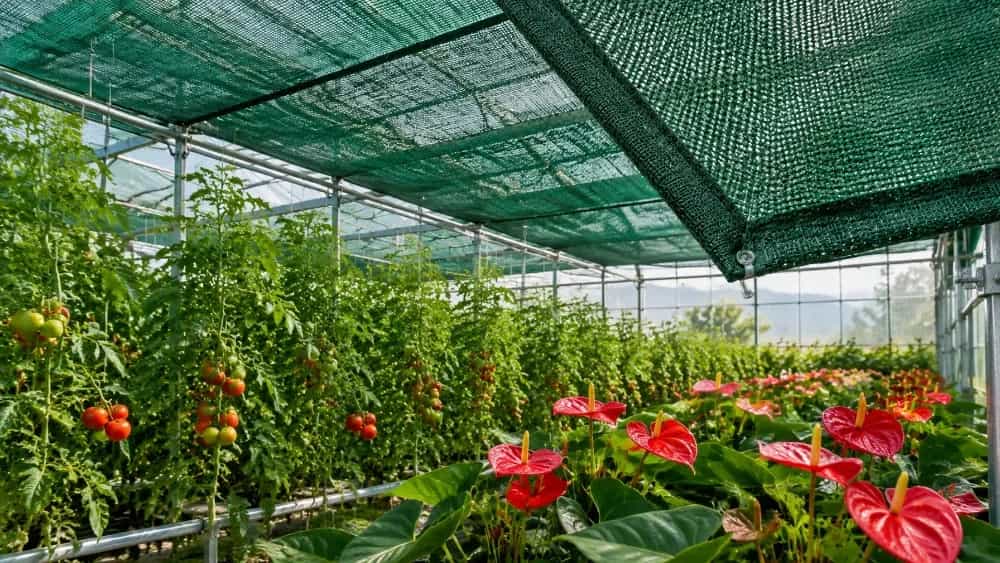
Our field investigations in agricultural structures in the southeast of Tehran province show that the price of mesh shade is not just a fixed number based on the square footage, but is a direct function of four polymer engineering variables: shading percentage, density or weight per surface unit, UV stabilizer percentage and type of mechanical knotting.
Shading nets with a low percentage of shading (30-50%) have a lower base price due to the lower consumption of polymer raw materials per square meter; These models are often used for flowers that require guided light such as chrysanthemums or outdoor vegetables in Varamin and Pakdasht plains. On the contrary, the denser 60, 70 and 80% sheds, which are equipped with a dense Rachel texture, consume more raw material and therefore have a higher weight value.
The second determining factor that is often overlooked in initial sales invoices is the percentage of sun stabilizer compounds. In the climatic conditions of Pakdasht, which has direct and dry summers, nets without at least 6% of standard anti-UV materials will suffer molecular fragility and tear due to wind within less than one growing season. In its extrusion lines, Tori Saiban North uses high-quality masterbatches resistant to light erosion to minimize the loss of efficiency caused by ultraviolet rays.
In addition, the width of the arches (rolls of 2 to 12 meters) has a direct effect on the cost of the production process and cutting waste; Wider arches, although they require higher sensitivity in the production process, but due to the reduction in the number of fastenings and sewing at height, they greatly reduce the labor costs of the installer for the greenhouse.
The effect of polyethylene granule price fluctuations on the finished price
The main material of the greenhouse shade net is heavy polyethylene granule (HDPE), the price of which is determined in the petrochemical commodity exchange. Any jump in exchange rates and changes in the value of polymer base materials will change the price of greenhouse shade factory doors in less than a few working days in warehouses; Therefore, a telephone inquiry before paying the final invoice is inevitable.
Comparing the performance of monofilament fabric and tape fabric
In practice, it has been observed that Raschel Knitted network fabrics show higher tensile strength compared to the strong seasonal winds of Pakdasht. The lack of threading when cutting or local perforation stabilizes the long-term economic value of this type of shade compared to cheap samples without stitching.
The difference in the climatic conditions of Pakdash and the need to choose engineered density
Pakdasht, as the flower and plant capital of the country, has a semi-desert climate with very hot summers and long sunny days. Luxmeter radiation intensity in July and August in this region reaches figures beyond the light capacity of many ornamental plant species. Incorrect selection of shed density with a lower price causes heavy damages to the quality of the greenhouse load.
For example, in the production of sensitive flowers such as gerbera, Dutch rose and orchid, canopy netting with a density of 60-70% has recorded the highest productivity; Because the temperature under the cover keeps between 4 and 8 degrees Celsius cooler than the outside environment and balances the evaporation and transpiration index. This balance causes a sharp reduction in irrigation periods and a reduction in energy consumption in pad and fan cooling systems.
On the other hand, for greenhouse crops such as eggplant, bell pepper and tomato in the southern parts of Pakdasht and Sharifabad, it is recommended to use 50% nets; Because the excessive drop in incoming light causes the phenomenon of stem thinning and late fruit. For this reason, buying based on technical advice and the actual need of the plant species is completely preferable to choosing only based on the cheaper price.
The price of the netting of Saiban North compared to the local middlemen of Pakdasht
In the traditional Pakdasht agricultural equipment market, the goods distribution cycle often includes several layers of brokers, storekeepers and small suppliers. The presence of these middlemen sometimes adds up to 30% to the final price of the shade net roll, without providing any exchange guarantee or polymer laboratory confirmation to the buyer.
Tori Saiban North has made it possible to send the greenhouse shade arches from the central warehouse directly to the Pakdasht Greenhouse Project with a direct supply approach. The elimination of brokerage fees, quality control of the exact weight of each tile (based on grams per square meter) and the provision of a guarantee of durability against sunlight are the main reasons that make buying without intermediaries economical for large-scale projects.
Purchasing from the original manufacturer also has the advantage that the greenhouse grower can take delivery of rolls in custom lengths (up to standard 50 or 100 meters) and desired widths, while local middlemen's inventory is usually limited to generic sizes with high profit margins.
The method of calculating the area, meterage and cost of installing shade mesh in Spanish and tunnel structures
To calculate the required square footage of the shade net and accurately estimate the purchase cost, the greenhouse owner should not only base it on the floor area of the greenhouse. In arched structures, the circularity of the roof causes an increase in the coverage area compared to the area occupied by the land.
In practice, for a standard structure with 3-meter side foundations and 8-meter opening, at least 20% is added to the surface area of the foundation to cover the upper arch and longitudinal overhangs. In addition to the cost of the shed itself, bracing requirements such as clip-on plastic fasteners (shade clips), springs and galvanized coated wire ropes also have an effect on the total factor. Proper installation with standard clips will prevent the net from tearing in the places connected to the structure when strong winds blow in the east of Tehran province.
Measurement steps for accurate purchase
- Calculation of the wide area of the openings based on the length of the arc of the roof of the greenhouse
- Adding 5 to 10% of additional area to overlap and fasten to the side sheds
- Determining the distances of the supporting wires of the structure to estimate the amount of clips needed (about 1.5 fasteners per 1 square meter)
An experimental guide to check product authenticity and distinguish high-quality lace from waste
One of the common problems in buying greenhouse shade in local markets is the sale of nets produced from recycled granules (recycled or waste) at the price of first-class polyethylene nets. Field experience shows that the nets produced from recycled materials give off a strong smell of burnt plastic, they look fragile and rough when touched by hand, and the dullness of their texture indicates the lack of uniformity of the color masterbatch.
Shade lace produced with new (virgin) materials has a mild surface gloss, high elasticity and a texture with a completely uniform grain. By using advanced spinning lines, North Shade Net offers products with the same pore density that do not break the network against the tensile stresses caused by storms and maintain their cooling efficiency for several years.
Type of land use and target plant in Pakdasht area | Shade Rate | Estimated weight (gram/square meter) | UV resistance level | Useful field durability range |
vegetables, greenhouses and outdoor nurseries | 30% to 40% | 35 to 45 | 3 to 4 percent | 3 to 4 years |
hydroponic tomatoes, eggplant, Cucumber | 50% | 55 to 65 | 5 to 6% | 4 to 5 years |
Cut flowers (rose, alstroemeria, chrysanthemum) | 60% | 70 to 85 | 6% special | 5 year warranty |
Luxury apartment plants, anthurium, orchids | 70% to 80% | 90 to 90 110 | 6 to 8 percent | 5 to 6 years |